

The Seed, the Soil and Our Common Home
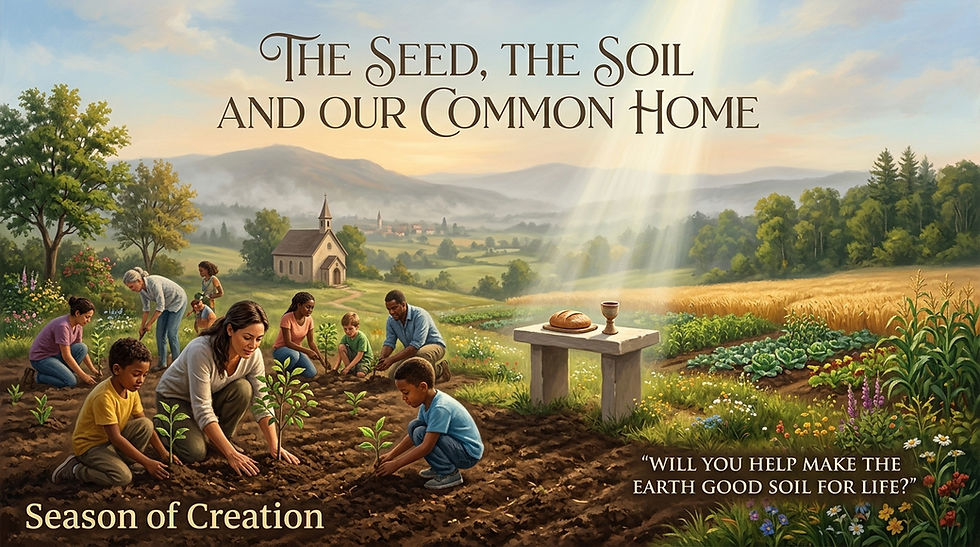
Earlier this morning we began by “going out” into creation. We meditated, we breathed, we moved, we praised God, we danced the Canticle of the Sun. We walked and sat in silence. And now we have come to the chapel to celebrate the Eucharist.
There is a beautiful connection between what we have experienced earlier and today’s Gospel.
Jesus speaks about a seed. “A sower went out to sow his seed. The seed falls on different kinds of soil.” And Jesus says that the good soil represents those who hear the word of God, hold it fast in an honest and good heart, and bear fruit with perseverance.
Today, during the Season of Creation, perhaps we can ask: What kind of soil are we?
But there is another question: What kind of soil are we creating for others – and for creation itself?
The Christian ecological vision begins with a simple truth: Creation is God’s gift. The earth is not simply raw material for us to consume. It is our common home.
And the Vatican document “Caring for our Common Home: A Responsible and Fraternal Response to the Triune God” reminds us that our relationship with creation is ultimately a relationship with God.
The Creator has entrusted creation to us. Therefore, the ecological crisis is not only a scientific, economic or political problem. It is also a spiritual and moral problem.
When we damage creation, we damage a relationship.
A relationship with God.
A relationship with our neighbor.
And a relationship with the rest of creation.
That is why the word “fraternal” in the title of the document is so important. We are not isolated individuals. We are one human family. And the poor and vulnerable are often the first to suffer when creation is abused.
So ecological conversion means changing the way we live. It means asking:
Do I consume only for myself?
Do I waste unnecessarily?
Do I care about the air, water, forests and animals entrusted to us?
Do I think about the kind of world we are leaving for the next generation?
And today the haze gives us a very concrete reminder. We wanted to celebrate outdoors, but we could not. The haze has entered our lives. It has affected our plans, our health, and our environment.
We should not waste even this disappointment. Let it become a spiritual wake-up call.
The Gospel speaks about good soil. And perhaps God is asking us: “Will you allow your heart to become good soil for my Word – and will you help make the earth good soil for life?”
There is one more beautiful connection. In a few moments, we will bring forward bread and wine. The bread comes from the earth. The wine comes from the earth. Human hands cultivate, harvest, and prepare them.
And God takes these gifts of creation and, through the Eucharist, transforms them into the Body and Blood of Christ. What a mystery!
Creation becomes gift.
Gift becomes offering.
Offering becomes communion.
This is the movement we need in our ecological conversion. We receive creation gratefully. We care for creation responsibly. And we return creation to God as an offering of love.
So perhaps our prayer today can be very simple:
Lord, make my heart good soil. Make my life fruitful. Teach me to receive creation with gratitude, to care for it with responsibility, and to share its blessings fraternally with others.
And as we receive Jesus in the Eucharist, may we remember:
The Christ whom we receive is the same Christ through whom all creation was made and in whom all creation is being renewed.
May our Eucharist today lead us not only to love God and neighbor, but also to become responsible and fraternal stewards of our Common Home.


